Ninja CREAMi Lid Won’t Lock? Easy Fixes

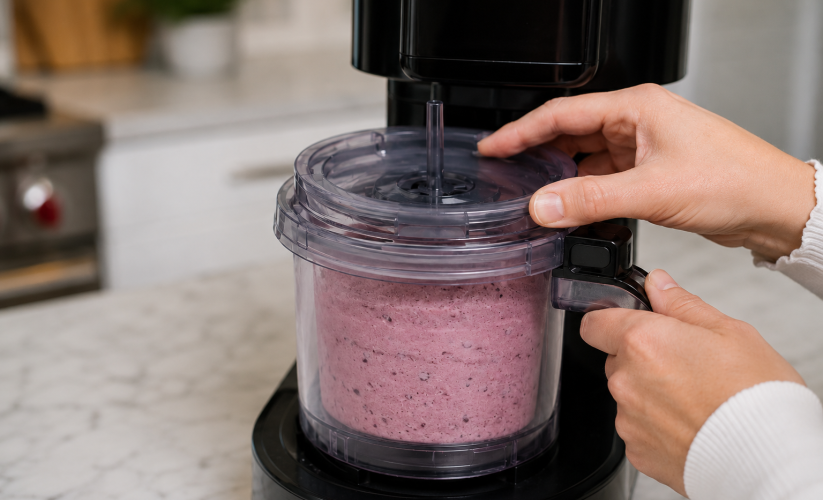
When a Ninja CREAMi lid won’t lock, the most likely causes are incorrect lid alignment, an improperly installed Creamerizer paddle, a pint that is not sitting flat, frozen mixture above the MAX FILL line, or residue around the lid’s locking tabs. In many cases, removing the components, cleaning and drying them, and carefully reassembling the unit solves the problem.
Do not force the lid closed. The Ninja CREAMi relies on specific alignment points to keep the pint, paddle, outer bowl, and processing lid securely positioned. Applying excessive pressure could damage a locking tab, deform the lid, or create unsafe operating conditions.
Before troubleshooting, identify which connection is causing the problem. The processing lid may refuse to lock onto the outer bowl, or the fully assembled outer bowl may fail to lock into the machine. These problems can feel similar, but they involve different components.
“Position the tab of the lid just slightly to the right of the outer bowl handle so the lines align.”
— Ninja Kitchen, NC300 Series CREAMi FAQs
Key Takeaways
- Start by unplugging the machine and removing the pint, paddle, lid, and outer bowl.
- Make sure the pint is compatible with your exact CREAMi model and sits completely flat.
- Keep frozen ingredients at or below the MAX FILL line.
- Install the Creamerizer paddle fully into the processing lid before attaching the lid.
- Align the lid markings with the outer bowl handle and rotate only in the instructed direction.
- Clean and dry the lid tabs, release button, paddle socket, bowl rim, and locking channels.
- Never force a lid that resists normal hand pressure.
- Replace visibly cracked, warped, or broken parts with compatible components.
- Contact Ninja support when the lid still will not lock after correct assembly and cleaning.
First, Determine What “Won’t Lock” Means
The Ninja CREAMi has more than one locking point. Identifying the exact failure can save time and prevent unnecessary disassembly.
The Lid Will Not Lock Onto the Outer Bowl
In this situation, the pint has been placed inside the outer bowl, but the processing lid will not rotate into its locked position. It may sit unevenly, stop partway through the turn, or lift on one side.
Common causes include:
- The lid started in the wrong position
- The pint is not seated correctly
- The paddle is not fully installed
- The pint is overfilled or bulging
- Food residue is blocking the lid channel
- The lid or bowl is warped
- An incompatible pint is being used
The Outer Bowl Will Not Lock Into the Machine
Here, the processing lid appears to be attached to the outer bowl correctly, but the complete assembly will not lift and rotate into position under the motor base.
Possible reasons include:
- The lid is not completely locked onto the outer bowl
- The outer bowl handle is not in the correct starting position
- The unit is not powered on when required by the model’s instructions
- The bowl platform or locking area is obstructed
- A sensor is not detecting the assembly
- A locking component has been damaged
The Lid Locks, but the INSTALL Light Still Flashes
A flashing INSTALL indicator generally means the machine does not detect a correctly installed bowl assembly. The cause may not be the lid itself. The outer bowl may need to be removed and reinstalled, or the lid may be slightly short of its fully locked position.
Turn the machine off, unplug it, remove the assembly, and inspect every component before trying again.
- 7-IN-1 ICE CREAM MAKER — A FROZEN TREAT FOR EVERY CRAVING: Choose from 7 one-touch programs — Ice Cream, Gelato, Sorbet, Milkshake, Smoothie Bowl, Lite Ice Cream, and Mix-In –each delivering the perfect combination of speed, pressure, and time for soft, creamy results.
- CREAMIFY TECHNOLOGY — INCREDIBLY SMOOTH, CREAMY RESULTS: Ninja’s exclusive Creamify Technology finely shaves through a uniformly frozen pint, transforming it into smooth textured frozen desserts in minutes.
- MAKE IT YOUR WAY — TOTAL INGREDIENT CONTROL: Create protein-packed ice cream, low-sugar sorbet, dairy-free treats, and vegan options — all from scratch with ingredients you choose. No preservatives, no fillers, just the flavors you love.

- 11 ONE-TOUCH PROGRAMS FOR EVERY FROZEN TREAT: Unlock a full lineup of CREAMi creations with 11programs — including Ice Cream, Sorbet, Gelato, Creamiccino, Frozen Yogurt, Italian Ice, Milkshake, Lite Ice Cream, Mix-In, Re-Spin, and more.
- XL FAMILY-SIZED CAPACITY — 50% MORE THAN THE ORIGINAL CREAMI: The new 24-oz. CREAMi XL Tubs hold 50% more than the original Ninja CREAMi pints, so you can make enough frozen dessert for the whole family.
- DUAL PROCESSING FOR TWO FLAVORS IN ONE TUB: Split a single base into two mix-in flavors without making a second batch. Add candy or chocolate chips to the top half, serve first, then mix cookies or nuts into the bottom and enjoy later — perfect for households with different tastes.
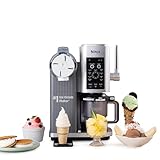
- SCOOP OR SWIRL: Customize flavors and choose between classic scooped or swirled treats. With 13 unique one-touch programs, there’s a frozen treat for everyone.
- 6 ADDED SOFT SERVE PROGRAMS: Create rich, creamy swirled treats at the touch of a button with Soft Serve, Fruit Whip, Frozen Custard, CreamiFit, Swirled Frozen Yogurt and Lite Ice Cream.
- CUSTOMIZATION: Control ingredients for low sugar, dairy-free, lower calorie, nut-free, highprotein, and vegan options. Your flavor, your mix-ins, your way.
How to Fix a Ninja CREAMi Lid That Won’t Lock
Work through the following steps in order. Avoid skipping directly to replacement parts because most locking problems are caused by assembly, alignment, or residue.
1. Unplug the Ninja CREAMi
Disconnect the machine before inspecting the paddle, lid socket, spindle area, or locking mechanism.
The Creamerizer paddle has sharp edges, and the machine should never be able to start while your hands are near the processing components. Place the unit on a dry, level counter with enough light to inspect the lid and bowl.
Do not insert utensils, screwdrivers, or other tools into the motor base.
2. Remove and Separate Every Component
Take apart the complete processing assembly:
- Remove the outer bowl from the machine if it is installed.
- Press the lid release button and separate the lid from the outer bowl.
- Remove the CREAMi pint.
- Release the Creamerizer paddle from the underside of the processing lid.
- Place each part on the counter for inspection.
Starting over is often faster than trying to correct one component while the assembly remains partially connected.
3. Confirm That the Pint Matches Your Model
Not all Ninja CREAMi containers are interchangeable.
Standard NC300-series pints, CREAMi Deluxe containers, Breeze containers, and Scoop & Swirl components may differ in dimensions and locking design. A container can appear similar while still sitting too high or too loosely in the outer bowl.
Check the model number printed on the machine’s rating label, which is usually found on the back or underside of the unit. Compare it with the compatibility information for the pint, outer bowl, lid, and paddle.
Using an incompatible container may prevent the lid from reaching the locking channel. It may also place the paddle at the wrong height during processing.
4. Check Whether the Pint Is Sitting Flat
Place the compatible pint inside the empty outer bowl without the lid.
The bottom of the pint should rest evenly in the bowl. It should not lean, rock noticeably, or remain raised on one side.
Remove anything that could be trapped beneath it, including:
- Ice
- Frozen drips
- Food residue
- Pieces of a damaged storage lid
- Labels or packaging material
- Small mix-in fragments
Even a thin piece of frozen mixture can raise the pint enough to stop the processing lid from locking.
Inspect the outer bowl for cracks, dents, or distortion. If it was placed near a heat source or cleaned using a method not approved for the model, its shape may have changed.
5. Make Sure the Pint Is Not Overfilled
A frozen base that rises above the MAX FILL line can interfere with the processing lid or paddle.
Ingredients may expand as they freeze. A base that appeared to be at the correct level when liquid could develop a raised dome after freezing. If that dome contacts the paddle or underside of the lid, the lid may not sit low enough to engage its tabs.
Look across the top of the frozen pint from the side. The surface should be reasonably level and remain below the model’s maximum fill marking.
Do not press the lid down over an overfilled pint. Transfer or remove enough product to create the required clearance. Follow the manufacturer’s preparation instructions before processing the adjusted pint.
A badly tilted frozen surface can also create processing problems. Ninja generally advises freezing CREAMi pints on a level surface rather than at an angle.
6. Install the Creamerizer Paddle Correctly
The paddle must be secured in the processing lid before the lid is attached to the outer bowl.
Turn the lid over and inspect the paddle socket and release mechanism. Clean away any frozen residue, sticky ingredients, or dried food. Make sure the area is completely dry.
Hold the paddle carefully by its upper section, keeping fingers away from its edges. Insert it into the opening in the underside of the lid until it is retained securely.
The paddle should not immediately fall out when the lid is gently returned to its normal orientation. However, avoid shaking the lid or testing it over bare feet or a hard floor.
If the paddle does not remain attached, check for:
- Ice in the socket
- A sticky paddle-release mechanism
- A damaged paddle stem
- Cracks around the lid opening
- A paddle intended for a different CREAMi series
An incorrectly seated paddle can sit too low or at an angle, preventing the processing lid from resting flat.
7. Clean the Lid and Outer Bowl Locking Surfaces
Residue is one of the easiest causes to overlook.
A thin layer of frozen dessert, protein mixture, syrup, nut butter, or ice can obstruct the lid tabs. The lid may begin rotating normally and then stop before it reaches the locked position.
Inspect and clean:
- The outer bowl rim
- The lid’s locking tabs
- The channels where the tabs travel
- The lid-release button
- The paddle socket
- The underside of the processing lid
- The top edge of the pint
- The outer bowl handle and alignment area
Wash removable components according to the care instructions for your model. Use a soft cloth or non-abrasive brush for narrow channels.
Avoid metal tools, knives, or screwdrivers. Scratching or shaving the plastic could weaken the part or alter the shape of the locking surfaces.
Dry everything thoroughly before reassembly. Water left in a small recess can freeze during later use and recreate the same problem.
8. Align the Processing Lid Correctly
On many traditional Ninja CREAMi models, the processing lid does not begin with its tab directly centered over the outer bowl handle.
Place the filled pint into the outer bowl. Position the processing lid so its alignment mark or tab begins slightly to the right of the bowl handle, as directed for the model. The markings on the lid and handle should guide the starting position.
Once the lid rests evenly:
- Apply gentle downward contact rather than heavy pressure.
- Rotate the lid toward the locked position.
- Stop when it reaches the proper alignment and feels secured.
- Confirm that the lid sits level around the entire bowl.
The movement should feel controlled. Some resistance from the locking mechanism is normal, but the lid should not require extreme force.
If it stops abruptly, remove it and start again. Forcing it from an incorrect starting point can damage the tabs.
9. Check the Lid-Release Button
The release button should move and return normally.
If the button remains partially pressed, the locking component may not engage. Food residue can collect around the button or beneath its edges, particularly when a processed mixture splashes onto the lid.
With the lid removed and washed, operate the button gently several times. It should move without grinding, sticking, or remaining depressed.
Do not dismantle the lid housing. If the release mechanism remains jammed after approved cleaning, replacement of the outer bowl lid is usually safer than attempting an internal repair.
10. Look for Warping, Cracks, or Broken Tabs
Inspect the lid at eye level and on a flat surface.
Warning signs include:
- One side of the lid sits higher than the other
- A locking tab is chipped or missing
- A crack extends from the paddle opening
- The release button is loose
- The lid appears oval instead of round
- The outer bowl rim is uneven
- The handle moves abnormally
- The paddle socket is damaged
A lid may become distorted after exposure to excessive heat or from being stored under pressure. Impact damage can also create a small crack that prevents the tabs from aligning.
Do not continue using a visibly damaged processing lid. The lid helps contain the assembly while the paddle moves through a hard frozen base, so a reliable lock is essential.
11. Reinstall the Outer Bowl Assembly
After the lid is fully locked onto the outer bowl, follow the model-specific steps for installing the entire assembly in the machine.
On many CREAMi models, the bowl is placed on the platform with the handle centered below the front of the unit. The handle is then rotated to raise and lock the assembly.
If the bowl will not move into place:
- Confirm that the processing lid is fully locked
- Check the starting position of the handle
- Inspect the platform for debris
- Make sure no packaging remains around the unit
- Verify that the machine is on a stable, level counter
- Review the exact owner’s guide for your model
Do not hold down or bypass a sensor. The interlock system is designed to prevent operation when the processing assembly is not installed correctly.
Why the Lid May Lock Without the Pint but Not With It
This is a useful diagnostic test.
If the empty outer bowl and lid connect normally, but the lid will not lock after the pint is inserted, the problem is probably related to the pint or its contents rather than the lid tabs.
Check for:
- An incompatible pint
- A raised or tilted frozen base
- Overfilling
- Ice beneath the pint
- A storage lid accidentally left on
- A pint that is cracked or deformed
- A paddle that contacts the frozen surface too early
If the lid does not lock even when the outer bowl is empty, focus on the lid, release button, locking tabs, channels, and outer bowl rim.
Do not operate the CREAMi with an empty outer bowl. This test is only for checking how the lid fits while the assembly is away from the machine.
What Not to Do
A stubborn lid can tempt users to apply more pressure, but some responses can turn a minor alignment issue into permanent damage.
Do Not Force the Lid
Using body weight, striking the handle, or twisting with tools may crack the lid or outer bowl.
Do Not Process an Overfilled Pint
The MAX FILL line exists to provide room for the components and the processing action. Removing excess mixture is safer than trying to compress the assembly.
Do Not Modify the Locking Tabs
Filing, cutting, heating, or bending the tabs can prevent the safety system from working as intended.
Do Not Mix Parts From Different Series
Use only parts confirmed to be compatible with the model. Similar appearance is not proof of compatibility.
Do Not Operate the Machine With a Damaged Lid
A crack or broken tab can worsen under processing forces. Replace the part before using the appliance again.
Do Not Reach Into the Motor Area
Unplug the machine and contact support if the spindle, sensor, or internal locking mechanism appears damaged.
When the Outer Bowl Lid Should Be Replaced
Cleaning and correct alignment cannot repair a cracked or distorted component.
Consider replacing the processing lid when:
- A locking tab has broken off
- The lid no longer sits flat
- The release button is permanently jammed
- The paddle will not stay attached
- The lid repeatedly unlocks or lifts
- Cracks are visible around the center opening
- The correct lid no longer fits an undamaged outer bowl
- Ninja support recommends replacement
Order by model number rather than by appearance. Standard CREAMi and CREAMi Deluxe machines use different outer bowl lids, and other versions may have their own components.
Official Ninja parts listings include separate outer bowl lids, paddles, bowls, and series-specific containers. Checking the model information before ordering reduces the chance of receiving a part that cannot lock correctly.
When to Contact Ninja Support
Contact the manufacturer when the lid still will not lock after the parts have been cleaned, dried, inspected, and correctly reassembled.
Support is particularly appropriate when:
- The appliance is new and has never locked correctly
- The lid or outer bowl arrived distorted
- The INSTALL light continues flashing
- The machine does not recognize a securely installed assembly
- The locking platform will not move normally
- The spindle remains in an unusual position
- A component broke during ordinary use
- The unit may still be covered by warranty
Have the model number, serial information, purchase date, and proof of purchase available. Photographs or a short video showing the alignment problem may also help support staff identify the affected part.
Stop using the appliance if the bowl, lid, paddle, or machine base appears damaged.
How to Prevent Future Lid-Locking Problems
A few habits can reduce repeated alignment and locking issues.
Clean the processing lid soon after use so ingredients do not dry around the tabs or release button. Remove and wash the paddle separately, then allow all components to dry fully before storage.
Freeze pints upright on a level shelf. Keep the mixture below the MAX FILL line and check for a raised surface before processing.
Store the processing lid where it will not be crushed or exposed to high heat. Avoid placing heavy cookware on top of it.
Keep sets of model-compatible parts together. This is especially important in homes with more than one CREAMi version.
Finally, do not rush the assembly process. Starting the lid from the correct alignment point is easier and safer than trying to correct it after the tabs have entered the wrong section of the locking channel.
Final Verdict
When a Ninja CREAMi lid won’t lock, the problem is usually caused by alignment, an incorrectly seated paddle, an overfilled pint, incompatible components, or residue in the locking channel.
Start by unplugging the machine and taking the assembly apart. Confirm that the pint is compatible and seated flat, install the paddle correctly, clean the lid and bowl, and use the alignment marks to reconnect the components.
The lid should lock with controlled hand pressure. It should never need to be forced. If correct assembly does not solve the problem, inspect the lid and outer bowl for damage and contact Ninja support or purchase a model-compatible replacement part.
Frequently Asked Questions
1. Why won’t my Ninja CREAMi lid turn all the way?
The lid may have started from the wrong alignment position, or something may be preventing it from sitting low enough. Remove the lid and check the pint, frozen mixture, paddle, bowl rim, and locking channels. Reposition the lid according to the alignment marks and rotate it gently. Stop if it requires excessive force.
2. Can an overfilled Ninja CREAMi pint stop the lid from locking?
Yes. Ingredients above the MAX FILL line or a frozen base that has expanded into a raised dome can contact the paddle or processing lid. This may prevent the lid from sitting flat enough to engage its locking tabs. Remove the excess and follow the manufacturer’s preparation guidance before processing.
3. Why does my Ninja CREAMi lid lock without the pint but not with it?
This usually points to a problem involving the pint or its contents. The pint may be incompatible, overfilled, warped, sitting on ice, or holding a tilted frozen base. The paddle may also be contacting the mixture before the lid reaches its correct position.
4. Should I force the Ninja CREAMi lid until it clicks?
No. The lid should lock using normal, controlled hand pressure when the parts are compatible, clean, and correctly aligned. Forcing it can crack the lid, damage the tabs, distort the outer bowl, or compromise safe operation. Remove the assembly and identify the obstruction instead.
5. How do I know whether my Ninja CREAMi lid is broken?
Look for cracked plastic, missing tabs, a jammed release button, an uneven shape, a damaged paddle socket, or a lid that no longer sits flat on an undamaged compatible bowl. Replace the lid if it is visibly damaged or repeatedly fails to remain secure after correct cleaning and assembly.
Last update on 2026-10-24 / Affiliate links / Images from Amazon Product Advertising API
*We may earn a commission for purchases made using our links. Please see our disclosure to learn more.