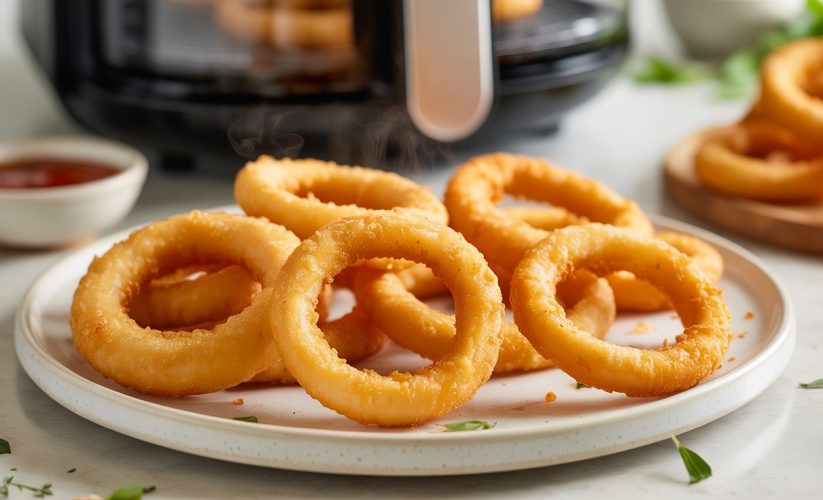
Ninja Air Fryer Onion Rings

Golden, crispy onion rings have long been a beloved appetizer and side dish, but traditional deep-frying methods can leave kitchens greasy and meals heavy with excess oil. The Ninja Air Fryer has revolutionized how home cooks approach this classic comfort food, offering a healthier alternative that doesn’t sacrifice the satisfying crunch everyone craves. This innovative kitchen appliance uses rapid air circulation technology to achieve that perfect crispy exterior while keeping the onion tender and sweet inside, all with a fraction of the oil used in conventional frying methods.
“Air fryers have transformed home cooking by making previously guilt-inducing foods accessible for everyday meals. The technology offers the satisfaction of fried foods with significantly less oil, making it easier to enjoy favorites like onion rings without the health concerns of traditional deep frying.”
— Food Science Journal
Key Takeaways
- Air fryer onion rings use up to 75% less oil than traditional deep-fried versions
- The Ninja Air Fryer’s precise temperature control ensures even cooking and consistent crispiness
- Proper preparation techniques, including three-step breading, are essential for optimal results
- Cooking time typically ranges from 8-12 minutes at 375-400°F
- Homemade onion rings can be customized with various seasonings and coatings
- Both fresh and frozen onion rings can be successfully prepared in the Ninja Air Fryer

- AIR CRISP TECHNOLOGY: 400℉ superheated air surrounds food for hot, crispy results with little to no oil.
- LARGE CAPACITY: The 5-QT nonstick basket and crisper plate fit up to 4 lbs of French fries or 5 lbs of chicken wings.
- 4-in-1 FUNCTIONALITY: Air Fry, Roast, Reheat, and Dehydrate.

- ALL-IN-ONE SYSTEM: Includes the Ninja Crispi PowerPod, 4-qt and 6-cup CleanCrisp glass containers, and 2 storage lids
- CRISPI POWERPOD: The power of a full-sized air fryer now in the palm of your hand
- SMALL & LARGE BATCH CONTAINERS: 6-cup container cooks a personal sized meal in 7 mins while the 4 QT fits a 4-LB chicken and veggies
- LESS FAT: Now enjoy guilt-free food. Air fry with up to 75% less fat than traditional frying methods. Tested against hand-cut, deep-fried French fries.
- WIDE TEMPERATURE RANGE: 105°F-400°F allows you to gently remove moisture from foods or quickly cook and crisp foods with convection heat.
- FAMILY-SIZED CAPACITY: 4-quart ceramic-coated nonstick basket and crisper plate fit 2 lbs of French fries.

- FAMILY-SIZED COOKING SYSTEM: 6-qt and 2.5-qt glassware, storage lids, crisper plates, and modular base for any occasion.
- POWERFUL COOKING SYSTEM: 1800-watt air fryer that can cook a 7.5-lb chicken, feeding up to 10 people.
- VERSATILE CAPACITY: Modular base adjusts to fit 2.5-qt, 4-qt, and 6-qt CleanCrisp Glassware for everyday or family-sized meals.
Understanding the Ninja Air Fryer Advantage
The Ninja Air Fryer has become a staple in modern kitchens, and for good reason. This countertop appliance uses convection heating technology to circulate hot air around food at high speeds, creating a crispy exterior that mimics deep-frying results. For onion rings specifically, this technology offers several distinct advantages over traditional cooking methods.
The rapid air technology ensures that heat reaches every surface of the onion ring evenly, eliminating the common problem of unevenly cooked breading. The adjustable temperature settings, typically ranging from 105°F to 400°F in most Ninja models, provide precise control over the cooking process. This precision is particularly important for onion rings, where the difference between perfectly golden and burnt can be a matter of minutes.
Additionally, the Ninja Air Fryer’s basket design allows excess oil and moisture to drip away from the food during cooking, resulting in a crispier final product. The non-stick coating on most baskets also means less breading sticks to the cooking surface, maximizing the coating that stays on the onion rings where it belongs.
Selecting the Right Onions
The foundation of excellent onion rings begins with choosing the right onions. Not all onion varieties are created equal when it comes to air frying, and selection can significantly impact the final result.
Sweet onions, such as Vidalia or Walla Walla varieties, are popular choices for onion rings because of their mild flavor and natural sweetness, which intensifies during cooking. These varieties have a higher sugar content and lower sulfur content, making them less pungent and more palatable when cooked. Their larger size also makes it easier to cut uniform rings, which is crucial for even cooking in the air fryer.
Yellow onions offer a more traditional onion ring flavor with a balance of sweetness and sharpness. They hold up well to high heat and maintain their structure during the air frying process. White onions provide a sharper, more pungent flavor that some prefer for a more intense onion taste.
Red onions can also be used, though they tend to be slightly more delicate and may soften more quickly during cooking. Regardless of the variety chosen, onions should be firm, heavy for their size, and free from soft spots or sprouting. The size matters too—medium to large onions work best, as they provide rings that are substantial enough to hold their coating but not so thick that they remain raw inside while the breading overcooks.
Preparing the Perfect Breading
The breading is where creativity meets technique in making exceptional air fryer onion rings. A proper three-step breading process creates layers that adhere well and crisp beautifully in the Ninja Air Fryer.
The first station consists of seasoned flour, which provides the initial dry layer that helps the subsequent wet ingredients adhere. All-purpose flour works well, though some cooks prefer adding a tablespoon of cornstarch to increase crispiness. Seasonings at this stage might include salt, black pepper, garlic powder, and paprika.
The second station is the wet mixture, traditionally made with beaten eggs. For enhanced flavor and binding, buttermilk can be mixed with the eggs, creating a tangy base that tenderizes the onion slightly while providing excellent adhesion for the final coating. Some recipes call for adding a splash of hot sauce or a teaspoon of Dijon mustard to this mixture for extra flavor complexity.
The third and final station is the coating that will become the crispy exterior. Traditional breadcrumbs are a classic choice, but panko breadcrumbs have become increasingly popular for air fryer recipes due to their larger, flakier texture that creates exceptional crunch. For an even crispier result, a mixture of half panko and half regular breadcrumbs often yields the best texture. This final coating should be well-seasoned with salt, pepper, and any additional spices like cayenne pepper, onion powder, or dried herbs.
Some variations include using crushed cornflakes, which create an ultra-crunchy coating with a slightly sweet flavor, or incorporating grated Parmesan cheese into the breadcrumb mixture for a savory, umami-rich crust. Crushed crackers, potato chips, or even crushed pretzels can provide unique textures and flavors for those looking to experiment beyond traditional recipes.
The Breading Process
Executing the breading process correctly ensures that the coating stays intact during air frying rather than falling off in disappointing clumps. After slicing the onions into rings approximately half an inch thick and separating them into individual rings, the coating process begins.
Each onion ring should first be dredged in the seasoned flour, ensuring complete coverage on all surfaces. Shaking off excess flour is important—too much will create a gummy texture when combined with the wet ingredients. Next, the ring is dipped into the egg mixture, again ensuring complete coverage. Allowing excess egg to drip off prevents the final coating from becoming too thick or soggy.
Finally, the ring is pressed into the breadcrumb mixture, using hands to gently but firmly press the coating onto all surfaces. For maximum adhesion, some cooks prefer to repeat the egg and breadcrumb steps, creating a double coating that’s less likely to separate during cooking.
After breading, placing the rings on a wire rack for 10-15 minutes allows the coating to set, which significantly reduces the likelihood of the breading sliding off during air frying. This resting period also allows the coating to dry slightly, which contributes to better crisping.
Cooking Technique and Temperature
Proper cooking technique in the Ninja Air Fryer transforms well-prepared onion rings into restaurant-quality results. Preheating the air fryer for 3-5 minutes at the cooking temperature ensures consistent results from the moment the onion rings are placed inside.
The ideal temperature for most onion rings falls between 375°F and 400°F. Lower temperatures may result in soggy breading, while higher temperatures risk burning the exterior before the onion inside has softened adequately. Most recipes find success at 380°F, which provides enough heat for rapid crisping without excessive browning.
Arranging the onion rings in a single layer with space between each ring is crucial. Overlapping or stacking rings leads to uneven cooking and steaming rather than crisping. Depending on the size of the air fryer basket, this may require cooking in batches. While it might be tempting to crowd the basket to save time, patience yields far superior results.
A light spray of cooking oil over the breaded rings before air frying enhances browning and crispiness. While the Ninja Air Fryer requires far less oil than deep frying, a minimal amount still helps achieve that golden color and crispy texture. Avocado oil, vegetable oil, or olive oil spray all work well, with avocado oil offering the highest smoke point for high-temperature cooking.
Cooking time typically ranges from 8 to 12 minutes, depending on the thickness of the rings and the specific model of Ninja Air Fryer being used. Flipping the rings halfway through the cooking time ensures even browning on both sides. Rather than setting a timer and walking away, checking the onion rings at the 8-minute mark and assessing their color and texture helps prevent overcooking.
Achieving Consistent Results
Consistency in air fryer cooking comes from understanding the variables that affect the outcome and controlling them as much as possible. The thickness of both the onion slices and the breading coating plays a significant role in cooking time and final texture. Slicing onions too thin results in rings that can become limp or overly crispy, while slices that are too thick may have a raw or undercooked center even when the breading appears done.
Ambient temperature and humidity also affect air fryer performance. In humid environments, breading may require slightly longer cooking times to achieve the same level of crispiness. The starting temperature of the onion rings matters too—rings that have been refrigerated after breading will need slightly more time than those cooked immediately at room temperature.
Different Ninja Air Fryer models may have slight variations in heating patterns and air circulation efficiency. Becoming familiar with a specific model’s quirks through trial and experience helps achieve consistent results. Keeping notes on successful batches, including temperature settings, cooking times, and any adjustments made, creates a personalized reference guide for future cooking sessions.
Working with Frozen Onion Rings
While homemade onion rings offer superior flavor and customization, frozen varieties provide convenience for quick meals and snacks. The Ninja Air Fryer excels at cooking frozen onion rings, often producing better results than oven baking.
Frozen onion rings should generally be cooked directly from frozen without thawing, which can make them soggy. Most frozen varieties cook well at 400°F for 8-10 minutes, though checking the package directions and adjusting based on the specific air fryer model is advisable. Like fresh rings, frozen ones should be arranged in a single layer without overlapping.
Shaking the basket or flipping the rings halfway through cooking ensures even crisping. Frozen rings typically don’t require additional oil spray, as most commercial varieties are already coated with sufficient oil. However, a very light spray can enhance crispiness if desired.
The key difference between frozen and fresh is that frozen rings may release more moisture during cooking. This is normal and shouldn’t negatively impact the final texture, as the air fryer’s design allows this moisture to evaporate quickly. If condensation builds up in the basket, pausing to shake it out midway through cooking can help maintain crispiness.
Seasoning Variations and Flavor Profiles
Beyond the classic seasoned breading, numerous seasoning variations can transform onion rings from simple to sophisticated. For those who enjoy heat, adding cayenne pepper, chipotle powder, or red pepper flakes to the breadcrumb mixture creates spicy onion rings with varying levels of intensity.
Herb-infused onion rings incorporate dried herbs like oregano, thyme, rosemary, or Italian seasoning into the coating for an aromatic twist. Fresh herbs don’t work as well in the dry coating, but they can be stirred into the egg mixture for subtle flavor enhancement.
Cheese lovers can mix grated Parmesan, Romano, or aged cheddar into the breadcrumb mixture for savory, umami-rich rings. The cheese adds both flavor and additional crisping power as it browns during cooking.
For an Asian-inspired variation, incorporating toasted sesame seeds, ginger powder, and a touch of Chinese five-spice into the coating creates onion rings with an entirely different flavor profile. Serving these with a soy-ginger dipping sauce or sweet chili sauce complements the Eastern-inspired seasoning.
Ranch-seasoned onion rings, made by adding ranch seasoning mix to the breadcrumb coating, appeal to those who love the classic flavor combination of ranch and onion. Similarly, adding barbecue seasoning or smoked paprika creates rings with a smoky, barbecue flavor that pairs well with grilled meats.
Serving Suggestions and Pairings
Onion rings from the Ninja Air Fryer shine as both appetizers and side dishes, pairing well with numerous main courses and occasions. As an appetizer, serving them with an array of dipping sauces transforms them into an interactive starter that guests can customize to their preferences.
Classic dipping sauces include ketchup, ranch dressing, and honey mustard, but elevating the sauce game can make onion rings memorable. Chipotle aioli, made by blending mayonnaise with chipotle peppers in adobo and lime juice, provides smoky heat. Sriracha mayo offers similar heat with an Asian twist, while garlic aioli delivers rich, savory flavor.
For those preferring tangy options, a buttermilk dressing or blue cheese dip provides cooling contrast to the rich, crispy rings. Barbecue sauce, whether sweet, tangy, or smoky, complements onion rings particularly well when they’re served alongside grilled or smoked meats.
As a side dish, air fryer onion rings pair excellently with burgers, sandwiches, and barbecue. Their crispy texture contrasts beautifully with juicy burgers, while their mild sweetness complements the smoky flavors of barbecued ribs or pulled pork. They also work well as part of a composed appetizer platter, alongside other air-fried items like mozzarella sticks, jalapeño poppers, or chicken wings.
Troubleshooting Common Issues
Even with careful preparation, onion rings can sometimes fall short of expectations. Understanding common problems and their solutions helps improve future batches.
If the breading falls off during cooking, the most likely culprits are insufficient drying time after breading or skipping the initial flour coating. Ensuring each ring is properly coated in all three stages and allowing them to rest before cooking nearly always resolves this issue. Using room-temperature eggs rather than cold ones can also improve adhesion.
Soggy onion rings typically result from overcrowding the basket, insufficient oil spray, or cooking at too low a temperature. Cooking in smaller batches with adequate space between rings and ensuring the temperature is at least 375°F addresses these issues. If rings are still soggy, increasing the temperature by 10-15 degrees for the last few minutes can help crisp them up.
Burnt breading with undercooked onion inside indicates the temperature is too high or the onion slices are too thick. Reducing the temperature to 360-370°F and slicing onions slightly thinner creates better balance between exterior crispiness and interior tenderness.
Unevenly cooked rings usually mean they weren’t flipped or shaken during cooking. Setting a reminder to flip or shake at the halfway point ensures even browning. If using an air fryer model with hot spots (areas that cook faster than others), rotating the basket position can also help.
Bland flavor suggests the breading wasn’t seasoned adequately. Onion rings need bold seasoning in the coating because the onion itself is relatively mild. Being generous with salt, pepper, and additional seasonings in both the flour and breadcrumb stages creates more flavorful results.
Storage and Reheating
While onion rings are best enjoyed immediately after cooking, proper storage and reheating techniques can preserve leftovers for later enjoyment. Once cooled to room temperature, leftover onion rings should be stored in an airtight container in the refrigerator, where they’ll keep for 2-3 days.
Reheating in the Ninja Air Fryer is far superior to microwave reheating, which inevitably makes breading soggy. To reheat, arrange the cold onion rings in a single layer in the air fryer basket and cook at 350°F for 3-5 minutes, or until heated through and re-crisped. No additional oil is necessary for reheating.
For longer storage, onion rings can be frozen after the initial cooking. Allow them to cool completely, then arrange in a single layer on a baking sheet and freeze until solid. Once frozen, transfer to a freezer-safe container or bag, where they’ll keep for up to three months. Reheat from frozen at 375°F for 6-8 minutes, checking for doneness and adjusting time as needed.
Uncooked breaded onion rings can also be frozen before air frying, which is an excellent meal prep strategy. Freeze them on a baking sheet, then transfer to a container. When ready to cook, air fry directly from frozen, adding 2-3 minutes to the normal cooking time.
Nutritional Considerations
One of the primary advantages of making onion rings in the Ninja Air Fryer is the significant reduction in calories and fat compared to deep-fried versions. Traditional deep-fried onion rings can contain 300-400 calories per serving with 20-30 grams of fat, largely due to oil absorption during frying.
Air-fried onion rings, by contrast, typically contain 150-200 calories per serving with 5-8 grams of fat, depending on the amount of oil spray used and the specific breading ingredients. This represents approximately a 50% reduction in calories and a 70-75% reduction in fat content.
The onions themselves provide nutritional benefits, including vitamin C, B vitamins, and dietary fiber. They also contain quercetin, a powerful antioxidant with anti-inflammatory properties. While the breading adds carbohydrates and some protein from the eggs, the overall nutritional profile of air-fried onion rings is considerably better than their deep-fried counterparts.
For those monitoring sodium intake, controlling the amount of salt in the breading allows for customization based on dietary needs. Using whole wheat breadcrumbs or panko increases fiber content slightly, while incorporating ground flax or chia seeds into the coating can boost omega-3 fatty acids.
Those following gluten-free diets can easily adapt onion ring recipes by substituting gluten-free flour and breadcrumbs. The cooking method and technique remain the same, though gluten-free coatings may require slightly longer cooking times to achieve the same level of crispiness.
Cost Efficiency and Sustainability
Making onion rings at home in a Ninja Air Fryer offers significant cost savings compared to restaurant purchases or even high-quality frozen varieties. A single large onion typically costs $1-2 and can yield 15-20 substantial rings. Combined with basic pantry ingredients for breading—flour, eggs, and breadcrumbs—the total cost per serving is usually under $1.
By comparison, restaurant onion rings often cost $6-10 per serving, while quality frozen brands range from $4-7 per package. Over time, the savings from making onion rings at home add up considerably, potentially offsetting the initial investment in the Ninja Air Fryer itself.
From a sustainability perspective, making onion rings at home reduces packaging waste associated with frozen products and eliminates the environmental impact of restaurant delivery. The reduced oil usage also means less waste oil disposal, which has environmental implications when done improperly.
Choosing locally sourced or organic onions when possible further enhances the sustainability profile. Many farmers’ markets offer excellent onion varieties at competitive prices, particularly during late summer and fall when onions are harvested in many regions.
Conclusion
The Ninja Air Fryer has democratized the preparation of restaurant-quality onion rings, making them accessible for home cooks seeking healthier alternatives to deep-fried versions. Through proper technique—from selecting the right onions and creating well-seasoned breading to mastering temperature and timing—anyone can produce crispy, golden onion rings that rival or exceed those from professional kitchens.
The versatility of air fryer onion rings extends beyond the basic recipe, with endless possibilities for seasoning variations, coating alternatives, and serving applications. Whether enjoyed as a standalone snack, party appetizer, or accompaniment to burgers and sandwiches, these onion rings deliver satisfying crunch and flavor without the guilt of excessive oil.
By understanding the science behind air frying and the variables that affect outcome, cooks can troubleshoot issues and consistently produce excellent results. The significant reduction in fat and calories compared to traditional deep frying makes it possible to enjoy this beloved comfort food more frequently without compromising health goals.
As kitchen technology continues to evolve, the Ninja Air Fryer stands out as a versatile tool that transforms how we approach traditionally indulgent foods. Onion rings represent just one of countless applications, but they exemplify the appliance’s ability to deliver exceptional taste and texture with minimal oil. Whether cooking for family dinners, entertaining guests, or satisfying personal cravings, mastering air fryer onion rings opens the door to healthier, more accessible comfort food that doesn’t sacrifice the crispy, golden perfection that makes them so irresistible.
Frequently Asked Questions
Do onion rings need to be flipped in the air fryer?
Yes, flipping onion rings halfway through cooking ensures even browning and crispiness on both sides. Most recipes benefit from flipping at the 5-6 minute mark during an 8-12 minute cooking cycle. Some cooks prefer to shake the basket instead, which works well but may not provide quite as even results as manually flipping each ring. The Ninja Air Fryer’s design allows hot air to circulate, but the side touching the basket bottom receives slightly different heat exposure than the top side, making flipping beneficial for optimal results.
Why do onion rings fall apart in the air fryer?
Onion rings typically fall apart due to insufficient breading adhesion or onions that are sliced too thin. To prevent this, ensure each ring goes through all three breading stations (flour, egg, breadcrumbs) and allow the breaded rings to rest for 10-15 minutes before cooking so the coating can set. Using onion slices that are approximately half an inch thick provides enough structural integrity to hold together during cooking. Additionally, avoid moving or flipping the rings too aggressively, as rough handling can cause separation between the onion and its coating.
Can frozen onion rings be cooked in a Ninja Air Fryer?
Absolutely. Frozen onion rings actually cook exceptionally well in the Ninja Air Fryer, often better than in a conventional oven. Cook them directly from frozen without thawing at 400°F for 8-10 minutes, flipping or shaking halfway through. No additional oil spray is typically necessary since most frozen varieties are pre-coated with oil. The air fryer’s rapid air circulation crisps the exterior beautifully while preventing the sogginess that often results from oven baking. Check package directions for specific recommendations, but most frozen varieties follow this general guideline.
What temperature should the Ninja Air Fryer be set to for onion rings?
The optimal temperature for cooking onion rings in a Ninja Air Fryer is between 375°F and 400°F, with 380°F being the sweet spot for most recipes. This temperature range provides enough heat to quickly crisp the breading and create golden-brown color without burning the coating before the onion inside has softened. Thicker rings may benefit from slightly lower temperatures (370-375°F) with extended cooking time, while thinner rings can handle the higher end of the range. Adjusting temperature by 10-15 degrees based on the results helps fine-tune the process for specific preferences.
How long do homemade air fryer onion rings stay crispy?
Onion rings are crispiest immediately after cooking and begin to soften within 30-60 minutes as they cool and absorb moisture from the air. For best results, serve them fresh from the air fryer. If holding for a short period before serving, placing them on a wire rack rather than a plate helps maintain some crispiness by allowing air to circulate around them. Leftovers stored in the refrigerator will lose their crispiness entirely but can be re-crisped by reheating in the air fryer at 350°F for 3-5 minutes. Reheating won’t restore the exact texture of freshly cooked rings but comes remarkably close.
Last update on 2026-02-27 / Affiliate links / Images from Amazon Product Advertising API
*We may earn a commission for purchases made using our links. Please see our disclosure to learn more.