Huli Huli Chicken on the Ninja Woodfire Grill

The sweet and savory flavors of Hawaiian-style grilled chicken have captivated food lovers for decades, and recreating this island classic at home has never been easier. The Ninja Woodfire Grill brings authentic wood-fired flavor to the backyard, making it the perfect tool for preparing this sticky, caramelized chicken that originated in the Aloha State. This versatile outdoor cooking appliance combines the convenience of modern technology with the traditional smoky essence that makes Huli Huli Chicken truly special.
“The secret to great Huli Huli Chicken lies in the balance between sweetness and smoke, with each turn building layers of flavor that create something greater than the sum of its parts.”
— Traditional Hawaiian Grilling Wisdom
Key Takeaways
- Huli Huli Chicken is a Hawaiian grilling tradition featuring a sweet teriyaki-style marinade with pineapple juice and brown sugar
- The Ninja Woodfire Grill provides authentic wood-smoked flavor while maintaining precise temperature control
- Marinating the chicken for at least 4 hours ensures maximum flavor penetration
- The “huli huli” (turn turn) technique requires regular flipping to achieve even caramelization
- Wood pellets in the Ninja Woodfire Grill add depth without overwhelming the marinade’s balanced flavors

- 7-IN-1 FUNCTIONALITY: Grill, BBQ smoke, Air Fry, Roast, Bake, Broil, and Dehydrate with 100% real woodfire flavors all in one place.
- CAPACITY TO ENTERTAIN: 180 square inches of cooking space—30% more than the original Ninja outdoor grill—that fits up to 2 full racks of ribs, 10 burgers, 4 lbs of wings, 2 7-lbs chickens, or a 10-lb brisket.
- COOK WITHOUT THE GUESSWORK: Use the Ninja ProConnect app to pair your grill to your phone to monitor and control cook time and temp of two different proteins, receive real-time notifications, and even access cooking charts.

- MASTER GRILL, BBQ SMOKER, & AIR FRYER: All in one with 100% real smoky flavor.
- ELECTRIC MASTER GRILL: Get all the performance of a full-size propane grill* with the same char and searing, with 1760 Watts of fully electric power. *compared to a Weber spirit
- FOOLPROOF BBQ SMOKER: Create authentic BBQ bark and flavor fast and easy with just 1/2 cup of pellets.

- MASTER GRILL, BBQ SMOKER, & AIR FRYER: All in one with 100% real smoky flavor..Voltage: 120 volts
- MASTER GRILL: Get all the performance of a full-size propane grill with the same char and searing.
- FOOLPROOF BBQ SMOKER: Create authentic BBQ bark and flavor fast and easy with just 1/2 cup of pellets.

- MASTER GRILL, BBQ SMOKER, & AIR FRYER: All In one with 100% authentic smoky flavors.
- MASTER GRILL: Get all the performance of a full-size propane grill with the same char and searing.
- FOOLPROOF BBQ SMOKER: Create authentic BBQ bark and flavor fast and easy with just 1/2 cup of pellets.
Understanding Huli Huli Chicken
Huli Huli Chicken represents one of Hawaii’s most beloved culinary traditions, born from the ingenuity of a chicken farmer in the 1950s. The name “huli” means “turn” in Hawaiian, referring to the constant rotating required during the grilling process. This turning motion ensures that the sugary marinade caramelizes evenly without burning, creating that signature glossy coating that defines the dish.
The traditional recipe relies on a carefully balanced marinade that combines soy sauce, brown sugar, fresh ginger, and pineapple juice. These ingredients work in harmony to create layers of flavor—salty, sweet, tangy, and aromatic. The pineapple juice serves a dual purpose: it adds tropical sweetness while its natural enzymes help tenderize the meat, resulting in chicken that’s both flavorful and succulent.
What sets this dish apart from other grilled chicken recipes is the interplay between the marinade and the cooking method. The high sugar content in the sauce means that direct heat must be managed carefully. Too hot, and the exterior burns before the interior cooks through. Too cool, and the chicken won’t develop that sought-after caramelized crust. This delicate balance is where the Ninja Woodfire Grill truly shines.
Why the Ninja Woodfire Grill Works Perfectly
The Ninja Woodfire Grill addresses the traditional challenges of preparing Huli Huli Chicken with remarkable efficiency. Unlike conventional grills that can have hot spots and temperature fluctuations, this appliance maintains consistent heat distribution across the entire cooking surface. This consistency proves crucial when working with a sugar-heavy marinade that can quickly go from beautifully caramelized to charred.
Temperature control stands as perhaps the most significant advantage. The digital controls allow for precise heat management, typically maintaining optimal temperatures between 350°F and 400°F for this particular dish. This precision eliminates the guesswork that often leads to burnt chicken on traditional charcoal or gas grills.
The wood pellet system integrated into the Ninja Woodfire Grill adds another dimension to the cooking process. While the marinade provides the primary flavor profile, the subtle smoke from wood pellets—whether hickory, mesquite, or applewood—enhances the overall taste without overpowering the delicate balance of sweet and savory notes. The smoke penetrates the chicken, adding complexity that elevates the dish beyond what can be achieved with a standard outdoor grill.
The grill’s design also accommodates the frequent flipping required for authentic Huli Huli Chicken. The spacious cooking surface and consistent heat mean that each turn of the chicken receives the same treatment, promoting even cooking and caramelization. The grate design prevents smaller pieces from falling through while still allowing excess marinade to drip away, preventing flare-ups that could ruin the dish.
Preparing the Perfect Marinade
Creating an authentic marinade begins with understanding the role each ingredient plays in the final product. Soy sauce forms the savory foundation, providing umami depth and saltiness. Brown sugar contributes sweetness and aids in caramelization, while also balancing the saltiness of the soy sauce. Fresh ginger adds a warm, slightly spicy note that cuts through the richness, and garlic provides aromatic complexity.
Pineapple juice serves multiple functions beyond flavor. Its acidity helps break down proteins in the chicken, ensuring tender meat even after high-heat cooking. The natural sugars in the juice contribute to the glossy glaze that forms during grilling. Some variations include ketchup for additional body and tanginess, while others incorporate rice vinegar for extra acidity.
The proportions matter significantly. A typical marinade might include one cup of soy sauce, one cup of brown sugar, three-quarters cup of pineapple juice, one-third cup of ketchup, two tablespoons of fresh grated ginger, and several cloves of minced garlic. These ingredients should be whisked together until the sugar fully dissolves, creating a smooth, pourable liquid.
For optimal results, the chicken should marinate for a minimum of four hours, though overnight marination produces even better flavor penetration. The marinade needs to be reserved in two portions: one for marinating the raw chicken and a separate batch for basting during cooking. This separation prevents cross-contamination and ensures food safety.
Preparing the Chicken
Chicken selection impacts both flavor and texture. Bone-in, skin-on chicken thighs offer the most forgiving option due to their higher fat content, which keeps the meat moist even if slightly overcooked. Chicken breasts work well but require more attention to prevent drying out. Whole chicken legs provide a nice balance between dark and white meat.
Before marinating, the chicken should be patted dry with paper towels. Excess moisture prevents the marinade from adhering properly. Some cooks score the chicken pieces with shallow cuts, allowing the marinade to penetrate deeper into the meat. This technique proves especially useful for thicker pieces.
The marinating vessel should be non-reactive—glass or food-grade plastic containers work best. Aluminum or other reactive metals can interact with the acidic marinade, potentially affecting flavor. The chicken pieces should be fully submerged or regularly turned if the marinade doesn’t completely cover them.
Room temperature matters when it comes to grilling. Chicken taken directly from the refrigerator to the grill cooks unevenly, with the exterior potentially burning before the interior reaches safe temperatures. Allowing the marinated chicken to sit at room temperature for 20-30 minutes before grilling promotes more uniform cooking.
Setting Up the Ninja Woodfire Grill
Preparation begins with selecting the appropriate wood pellets. Fruit woods like apple or cherry complement the sweet marinade beautifully, adding a mild, slightly sweet smoke. Hickory provides a more robust flavor that still works well with the dish. The pellet hopper should be filled according to manufacturer specifications, typically requiring only a small amount for the smoking process.
Preheating is essential. The grill should reach the target temperature before the chicken goes on, ensuring immediate searing that helps lock in moisture. For Huli Huli Chicken, a temperature around 375°F works well as a starting point. The Ninja Woodfire Grill’s digital display makes monitoring and maintaining this temperature straightforward.
The grill grates benefit from a light coating of oil to prevent sticking. A paper towel dipped in cooking oil and held with tongs can be used to wipe down the grates once they’re hot. This step proves especially important given the sticky nature of the marinade.
The woodfire setting should be activated according to the desired smoke intensity. For this dish, a moderate smoke level enhances without overwhelming. The Ninja Woodfire Grill allows users to adjust smoke levels, providing flexibility based on personal preference.
The Grilling Process
Placement on the grill should account for even spacing. Overcrowding prevents proper heat circulation and makes flipping difficult. Each piece needs enough room for easy maneuvering with tongs. The initial placement should be skin-side down for skin-on pieces, as this helps render fat and crisp the skin.
The first flip should occur after approximately 6-8 minutes, once the chicken releases easily from the grates. If the chicken sticks, it’s not ready to turn. The developing caramelization acts as a natural release agent. During each turn, fresh marinade can be brushed onto the chicken, building up layers of flavor and glaze.
The “huli huli” turning pattern continues every 5-7 minutes throughout the cooking process. This frequent flipping ensures even caramelization and prevents burning. The marinade’s sugar content means constant vigilance is necessary. Any signs of charring rather than caramelization indicate that the heat should be reduced slightly.
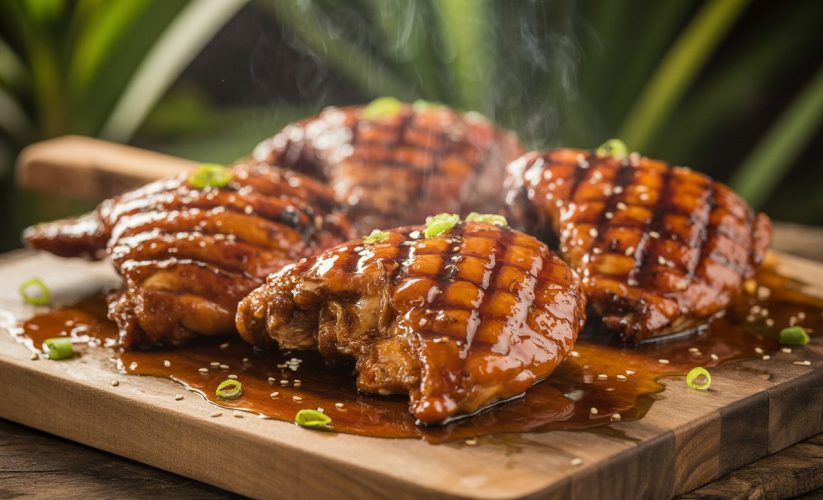
As the chicken cooks, the marinade transforms into a thick, glossy coating. The exterior should develop a deep mahogany color with slight charring in places—not black, but deeply caramelized. Visual cues include the marinade bubbling on the surface and the chicken pulling back slightly from the bone ends.
Internal temperature provides the most reliable indicator of doneness. Chicken should reach 165°F in the thickest part, away from bone. For thighs and legs, this typically requires 35-45 minutes of total cooking time. Breasts may cook more quickly, often in 25-35 minutes. The Ninja Woodfire Grill’s consistent heat helps achieve these temperatures predictably.
Managing the Glaze
The marinade’s high sugar content requires careful management to achieve proper glazing without burning. Early in the cooking process, the marinade should be applied sparingly. Too much too soon can lead to excessive dripping, which creates flare-ups and burnt spots. As the chicken develops a base layer of caramelization, additional marinade can be applied more liberally.
The final 10 minutes of cooking are crucial for developing the signature glossy finish. During this phase, the chicken should be basted every 2-3 minutes, allowing each layer to set slightly before adding more. The heat slightly caramelizes each layer, building up that characteristic sticky coating.
If the marinade begins to burn, reducing the heat slightly or moving the chicken to a cooler zone prevents further charring while still allowing cooking to continue. The Ninja Woodfire Grill’s temperature controls make these adjustments simple and precise.
Some cooks reserve a portion of fresh, uncooked marinade for the final basting stages. This ensures food safety while adding a fresh burst of flavor just before serving. This fresh marinade should be heated separately until it reaches a safe temperature before being brushed onto the nearly-finished chicken.
Resting and Serving
Once the chicken reaches the proper internal temperature and achieves the desired caramelization, it should rest for 5-10 minutes before serving. This resting period allows juices to redistribute throughout the meat, ensuring each bite remains moist. Cutting into the chicken immediately causes these juices to run out, leaving the meat drier.
During the resting period, the residual heat continues to cook the chicken slightly. Many experienced cooks remove the chicken when it reaches 160°F, knowing it will climb the final five degrees during rest. This approach helps prevent overcooking, particularly with breast meat.
Presentation matters with Huli Huli Chicken. The glossy, caramelized exterior should be visible and inviting. Garnishing with sesame seeds and sliced green onions adds visual appeal and provides textural contrast. Fresh pineapple rings grilled alongside the chicken make an excellent accompaniment, echoing the tropical flavors in the marinade.
Traditional serving suggestions include steamed white rice, which soaks up the flavorful glaze, and macaroni salad, a Hawaiian plate lunch staple. Grilled vegetables like bell peppers, zucchini, and onions complement the rich chicken while adding nutritional balance to the meal.
Troubleshooting Common Issues
Burnt exteriors with undercooked interiors typically result from excessive heat. Reducing the grill temperature by 25-50°F allows the chicken to cook through before the surface burns. The Ninja Woodfire Grill’s precise controls make temperature adjustments easy, unlike traditional grills where airflow adjustments provide less predictable results.
Dry chicken usually stems from overcooking or insufficient fat content. Using thighs instead of breasts helps, as does careful temperature monitoring. Removing the chicken at 160°F internal temperature and allowing carryover cooking to finish the job prevents moisture loss.
Insufficient caramelization often indicates that the marinade lacks sugar or that the cooking temperature is too low. Ensuring the brown sugar fully dissolves in the marinade and maintaining temperatures around 375°F promotes proper caramelization. The chicken should develop a deep, rich color rather than remaining pale.
Flare-ups occur when excessive marinade drips onto the heat source. While the Ninja Woodfire Grill is designed to minimize this issue, ensuring excess marinade drips off before placing chicken on the grill helps prevent it. If flare-ups occur, temporarily moving the chicken to an unlit area allows flames to subside.
Overly smoky flavor happens when too many wood pellets are used or when the smoke setting is too high. For Huli Huli Chicken, subtle smoke enhancement works best. The marinade provides the primary flavor, so smoke should support rather than dominate.
Variations and Adaptations
Regional variations exist even within Hawaii. Some recipes incorporate bourbon or rum for added depth, while others use chicken broth to thin the marinade slightly. These adaptations allow for personalization while maintaining the essential character of the dish.
Spice enthusiasts can add crushed red pepper flakes or fresh chili peppers to the marinade. The heat balances the sweetness, creating a more complex flavor profile. Starting with a small amount allows for adjustment based on heat tolerance.
For those seeking to reduce sugar, natural alternatives like honey or maple syrup can replace some or all of the brown sugar. These substitutions change the flavor slightly but still produce excellent caramelization. The cooking process may need minor adjustments as different sugars caramelize at different rates.
Vegetarian adaptations using tofu or tempeh work surprisingly well with this marinade. These proteins absorb the flavors readily and develop pleasant caramelization. Cooking times will differ, typically shorter than chicken, but the basic technique remains the same.
Storage and Reheating
Leftover Huli Huli Chicken stores well when properly handled. Once cooled to room temperature, it should be refrigerated within two hours. Stored in an airtight container, it remains food-safe for 3-4 days. The flavors often deepen overnight, making leftovers particularly enjoyable.
Reheating should be done gently to prevent drying out the meat. The oven at 325°F works well, with the chicken covered in foil to retain moisture. Heating until the internal temperature reaches 165°F ensures food safety while preserving texture. The microwave, while faster, tends to make the chicken rubbery and should be used only when necessary.
The glazed exterior may soften during storage but can be revived somewhat during reheating. For best results, uncovering the chicken during the final few minutes of reheating helps crisp the surface slightly. Some cooks brush additional marinade on during reheating to refresh the glaze.
Frozen storage extends the shelf life to 2-3 months. The chicken should be wrapped tightly to prevent freezer burn. Thawing in the refrigerator overnight produces better texture than microwave thawing. Once thawed, the chicken should be reheated and consumed within 24 hours.
Pairing Suggestions
Beverage pairings can enhance the dining experience. The sweet and savory profile of Huli Huli Chicken pairs well with fruit-forward drinks. Pineapple juice, passion fruit juice, or tropical cocktails echo the Hawaiian theme. For those who prefer alcoholic options, a light lager or wheat beer provides refreshing contrast to the rich glaze.
Side dishes should complement rather than compete with the bold flavors. Simple preparations work best—steamed vegetables, coconut rice, or a crisp cucumber salad. The goal is to provide textural and flavor contrast while allowing the chicken to remain the star.
Grilled fruit serves as both side dish and dessert. Pineapple, peaches, or mango take on wonderful caramelization when grilled, their natural sugars intensifying. These can be prepared on the Ninja Woodfire Grill alongside the chicken, making efficient use of the cooking space.
Traditional Hawaiian sides like poi, lomi lomi salmon, or haupia (coconut pudding) create an authentic island feast. While these may require special shopping or preparation, they transform the meal into a cultural experience rather than just dinner.
The Cultural Significance
Understanding the cultural context enriches the cooking experience. Huli Huli Chicken emerged from Hawaii’s plantation era, when diverse immigrant populations brought their culinary traditions and adapted them to local ingredients. The dish represents this fusion—Japanese soy sauce, Chinese grilling techniques, and Hawaiian pineapple combining into something uniquely local.
The communal nature of Hawaiian cooking traditions means Huli Huli Chicken often appears at gatherings, celebrations, and fundraisers. The sight and smell of chicken rotating over grills has become synonymous with community events across the islands. Recreating this dish at home carries forward this tradition of bringing people together over food.
Respecting these origins means honoring the basic techniques and flavors even while making the recipe one’s own. The “huli huli” turning motion, the balanced sweet-savory marinade, and the patient caramelization process all connect modern cooks to the dish’s history.
Conclusion
Mastering Huli Huli Chicken on the Ninja Woodfire Grill combines traditional Hawaiian grilling techniques with modern convenience. The result is tender, flavorful chicken with a gorgeous caramelized glaze that captures the essence of island cooking. The Ninja Woodfire Grill’s precise temperature control, consistent heat distribution, and wood-fired flavor enhancement make it an ideal tool for this classic dish.
The process requires attention and patience—the frequent turning, careful heat management, and gradual glaze building all contribute to the final product. However, the relatively simple marinade and straightforward technique make this an accessible recipe for cooks of varying skill levels. With practice, the timing and heat adjustments become intuitive, allowing for consistent results.
Whether preparing a weeknight family dinner or hosting a backyard gathering, Huli Huli Chicken delivers impressive results that transport diners to the Hawaiian islands. The combination of sweet caramelized glaze, tender meat, and subtle smoke creates a memorable eating experience that explains why this dish has endured for decades.
Frequently Asked Questions
Can the marinade be prepared in advance and stored?
The marinade can be prepared up to 3 days in advance and stored in a sealed container in the refrigerator. In fact, allowing the marinade to sit helps the flavors meld together. Before using, give it a good stir to ensure the sugar hasn’t settled at the bottom. The marinade can also be frozen for up to 3 months, making meal prep even more convenient. When ready to use, thaw completely and whisk well before adding to the chicken.
What’s the best chicken cut for beginners?
Bone-in, skin-on chicken thighs offer the most forgiving option for those new to grilling. Their higher fat content means they stay moist even if slightly overcooked, and they’re harder to dry out than chicken breasts. The flat shape of thighs also promotes even cooking and caramelization. Once comfortable with thighs, branching out to drumsticks, breasts, or even whole chickens becomes easier with the techniques already mastered.
How can smoke flavor be adjusted without overwhelming the marinade?
The Ninja Woodfire Grill allows for smoke intensity control, making adjustment simple. Start with the lowest smoke setting and increase if desired. For subtle smoke, use fruit woods like apple or cherry and limit pellet quantity. For more pronounced smoke, hickory or mesquite with higher settings work well. Running the grill on smoke setting for the first half of cooking, then switching to standard grilling for the remainder, provides smoke flavor while allowing the marinade to shine.
Is it possible to prepare this indoors?
While the Ninja Woodfire Grill is designed for outdoor use, achieving similar results indoors is possible with adaptations. An oven broiler can provide the necessary heat for caramelization, though frequent turning remains essential. The chicken should be placed on a wire rack over a baking sheet to allow heat circulation. Liquid smoke added to the marinade approximates the wood-fired flavor. While the results differ slightly from outdoor grilling, the technique still produces delicious chicken with the characteristic sweet glaze.
What should be done if the marinade is too salty or too sweet?
Adjusting marinade balance is straightforward. If too salty, add more pineapple juice, brown sugar, and a splash of water to dilute the soy sauce. If too sweet, additional soy sauce and a squeeze of fresh lime juice help balance the flavors. Tasting the marinade before adding chicken allows for corrections. Remember that the flavors concentrate somewhat during cooking, so a slightly milder marinade often produces better results than one that tastes perfectly balanced raw.
Last update on 2026-04-09 / Affiliate links / Images from Amazon Product Advertising API
*We may earn a commission for purchases made using our links. Please see our disclosure to learn more.