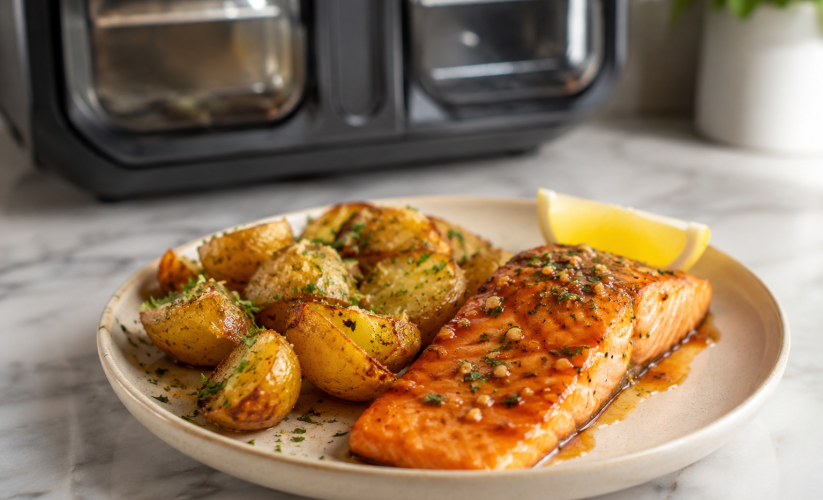
Honey Garlic Salmon with Crispy Parmesan Potatoes

Honey garlic salmon with crispy Parmesan potatoes is the kind of complete dinner that feels special without demanding an evening of complicated preparation. The salmon is tender and flaky, with a glossy glaze that balances sweet honey, savory soy sauce, fresh garlic, and tangy Dijon mustard. On the side, baby potatoes develop crisp, deeply seasoned edges beneath a light coating of Parmesan.
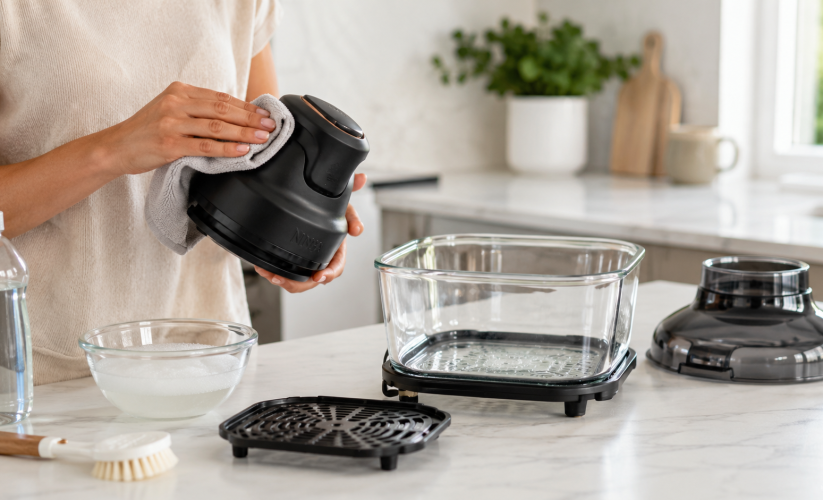
Preparing both components in the Ninja Crispi DualZone Glass Countertop Air Fryer makes the meal especially convenient. Its two independently controlled cooking zones allow the potatoes to cook at a higher temperature for longer while the more delicate salmon cooks separately. The Smart Finish feature can coordinate the zones so the main dish and side are ready together.
The result is a flavorful weeknight dinner with minimal cookware, straightforward preparation, and less waiting between batches. It is also flexible enough to customize with vegetables, different seasonings, or a spicier glaze.
“Fish is safe at 145 degrees F.”
— U.S. Department of Agriculture Food Safety and Inspection Service
Key Takeaways
- The Ninja Crispi DualZone allows the salmon and potatoes to cook separately while finishing at approximately the same time.
- Small, evenly cut potatoes produce the most consistent tender centers and crispy edges.
- Drying the salmon and potatoes before seasoning helps encourage better browning.
- Applying some of the honey garlic glaze near the end of cooking reduces the risk of excessive darkening.
- Salmon should reach a safe internal temperature of 145°F when measured in its thickest section.
- The complete meal can usually be prepared in approximately 35 minutes, including preparation and cooking.
No products found.
Why This Recipe Works in the Ninja Crispi DualZone
Salmon and potatoes are a natural pairing, but they do not require the same cooking conditions. Potatoes benefit from high heat and a relatively long cooking time. Salmon cooks much more quickly and can become dry when left at a high temperature for too long.
The Ninja Crispi DualZone addresses this difference by giving each food its own cooking container and settings. The potatoes can begin cooking first at 400°F, while the salmon can be programmed at a slightly lower temperature for a shorter period.
Smart Finish is useful here because it delays the shorter salmon cycle so both zones complete their programs together. Instead of cooking the potatoes, setting them aside, and then preparing the salmon, the appliance coordinates the two components.
The glass containers also make it easier to observe browning without repeatedly interrupting the cooking cycle. However, visual appearance should not replace checking the salmon with a food thermometer.
Recipe Overview
Choosing the Best Salmon
Fresh or properly thawed frozen salmon can be used for this recipe. Choose fillets that are relatively similar in thickness so they cook at approximately the same rate. Center-cut portions are particularly convenient because their uniform shape reduces the chance of one end becoming dry before the thickest area is cooked.
Salmon fillets between 1 and 1½ inches thick generally work well. Thin tail pieces may finish several minutes sooner and should be checked early.
Skin-on salmon can help protect the bottom of the fish from direct heat. Place it skin-side down and leave it in that position throughout cooking. The skin may not become as crisp as it would in a skillet, particularly when the fillet is coated in glaze, but it provides a useful protective layer.
Completely thaw frozen salmon in the refrigerator before cooking. Cooking partially frozen portions can produce an overdone exterior and an undercooked center.
Choosing and Cutting the Potatoes
Baby gold, red, or mixed-color potatoes are all suitable. Gold potatoes tend to have a creamy interior, while red potatoes maintain their shape particularly well.
Cut the potatoes into pieces of similar size. Small baby potatoes can be halved, while larger ones may need to be quartered. Aim for pieces approximately ¾ to 1 inch wide.
Uneven potatoes create uneven results. Large pieces may remain firm in the center while smaller pieces become overly browned. After washing and cutting them, dry the potatoes thoroughly with a clean kitchen towel or paper towels. Excess surface moisture can delay browning.
How to Make Honey Garlic Salmon with Parmesan Potatoes
Step 1: Prepare the Potatoes
Wash the baby potatoes and cut them into evenly sized halves or quarters. Dry them thoroughly.
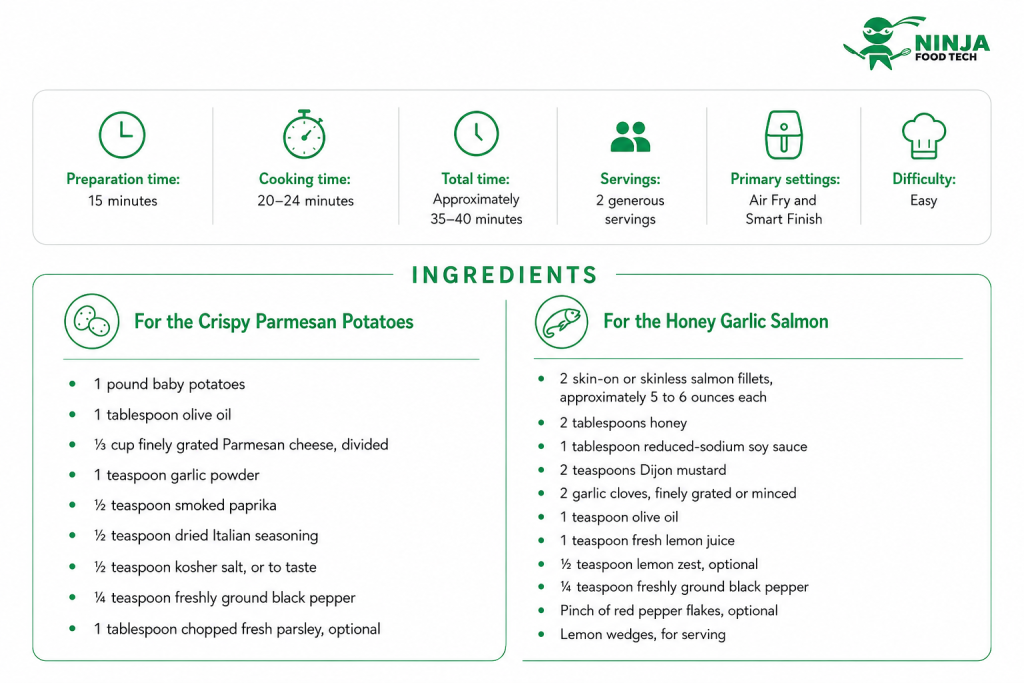
Place the potatoes in a mixing bowl and add the olive oil, about two-thirds of the Parmesan, garlic powder, smoked paprika, Italian seasoning, salt, and black pepper. Toss until every piece is lightly coated.
Do not add so much oil that it collects at the bottom of the bowl. A thin, even layer is enough to encourage browning and help the Parmesan and seasonings adhere.
Step 2: Arrange the Potato Zone
Place the crisper plate in one of the 4-quart glass cooking containers. Arrange the potatoes cut-side down when possible, leaving a little space between the pieces.
A completely empty space around every potato is not necessary, but avoid piling them into several layers. Air must be able to circulate around the food for the edges to crisp.
Set the potato zone to Air Fry at 400°F for 20 to 24 minutes. Do not begin the coordinated program until the salmon zone has also been set.
Step 3: Make the Honey Garlic Glaze
In a small bowl, combine the honey, soy sauce, Dijon mustard, garlic, olive oil, lemon juice, lemon zest, black pepper, and optional red pepper flakes.
Stir until the mustard is fully incorporated and the glaze looks smooth. Taste a very small amount before it touches the raw salmon. Add another squeeze of lemon if it tastes too sweet or a little more honey if it tastes too sharp.
Reserve approximately one-third of the glaze in a separate clean bowl. This portion will be brushed over the salmon near the end of cooking. Keeping it separate prevents contamination from the brush used on raw fish.
Step 4: Prepare the Salmon
Pat the salmon completely dry with paper towels. Moisture on the surface can dilute the glaze and interfere with browning.
Lightly season the fillets with black pepper. Additional salt may not be necessary because the soy sauce already contributes sodium.
Place the crisper plate in the second glass container. Arrange the salmon skin-side down, leaving space between the fillets. Brush the tops and sides with a thin coating of the main portion of honey garlic glaze.
Avoid pouring a deep pool of glaze around the salmon. Honey can darken quickly under strong heat, and excess glaze may scorch before the center of the fish is ready.
Step 5: Program the Salmon Zone
Set the salmon zone to Air Fry at 390°F for 9 to 12 minutes. Thick fillets may require 12 to 14 minutes, while thin fillets can finish in as little as 7 to 9 minutes.
Select Smart Finish after programming both zones. Follow the appliance prompts to begin cooking. The Ninja Crispi DualZone should coordinate the two programs so the salmon starts later and both foods finish at approximately the same time.
Step 6: Stir the Potatoes
When the potato zone reaches approximately the halfway point, carefully open it and stir or turn the potatoes with silicone-tipped tongs.
Return them in as even a layer as possible. Sprinkle the remaining Parmesan over the potatoes during the final 4 to 5 minutes. Adding part of the cheese later provides a fresher Parmesan flavor and reduces the chance of all the cheese becoming too dark.
Step 7: Glaze and Check the Salmon
During the final 2 to 3 minutes of the salmon cycle, brush the reserved clean glaze over the fillets. This creates a glossy finish and strengthens the honey garlic flavor without exposing all the honey to high heat for the entire cooking period.
Check the thickest part of each fillet with an instant-read thermometer. The USDA recommends cooking fish to a safe internal temperature of 145°F. The flesh should also appear opaque and separate easily when pressed with a fork.
Remove a finished fillet promptly rather than leaving it in the hot zone while waiting for a thicker piece.
Step 8: Finish and Serve
Allow the salmon to rest for 2 to 3 minutes. Toss the potatoes with chopped parsley and taste one before adding more salt.
Serve each salmon fillet with a generous portion of Parmesan potatoes and a lemon wedge. Spoon any remaining reserved glaze over the fish only if it has not contacted raw salmon.
How to Get Crispier Parmesan Potatoes
The first requirement is a dry surface. Water left from washing the potatoes produces steam, and steam works against crisping. Dry each piece before adding the oil and seasoning.
The second requirement is space. Overcrowding traps moisture between the potatoes. When making a larger batch, it is better to cook in additional rounds rather than tightly packing the container.
The cut side should face down during the first part of cooking. This creates broader contact with the hot crisper plate and encourages a golden crust. Turning the potatoes halfway through exposes additional surfaces to the circulating air.
Finely grated Parmesan works better than thick shreds. Fine cheese adheres more evenly and forms a delicate savory crust. Pre-shredded cheese can still be used, but it may not melt or cling as consistently.
For exceptionally crisp potatoes, microwave the cut potatoes for 3 to 4 minutes before seasoning. This optional step begins softening the centers, allowing the air-frying period to focus more heavily on browning the exteriors. Let the potatoes release their steam and dry them before adding the oil.
How to Keep Air-Fried Salmon Moist
The thickness of the fillets matters more than their weight alone. Begin checking thin pieces early, even when the programmed time has not ended.
Use only a thin layer of glaze at the beginning. A heavy coating can become dark before the salmon cooks through. The final clean layer added near the end provides a fresher, glossier finish.
A thermometer is the most dependable way to judge doneness. Insert it horizontally into the thickest portion so the tip reaches the center. Avoid touching the crisper plate, which can create an inaccurate reading.
Resting is also important. A brief rest allows heat to distribute more evenly through the fish and gives the glaze time to settle on the surface.
Flavor Variations
The basic recipe is easy to adapt without changing the dual-zone method.
For a spicier version, add sriracha, chili garlic sauce, or additional red pepper flakes to the glaze. For a brighter citrus flavor, increase the lemon zest and finish the salmon with fresh lemon juice.
Maple syrup can replace honey for a deeper caramel-like sweetness. Tamari or coconut aminos can replace soy sauce when appropriate for the cook’s dietary needs, although the salt level may differ.
The potatoes can be seasoned with Cajun seasoning, dried rosemary, ranch seasoning, or lemon pepper. Pecorino Romano can replace Parmesan for a sharper and saltier finish.
Vegetables You Can Add
Asparagus is one of the easiest vegetables to add because its cooking time is similar to salmon. Toss it with a little oil, salt, and pepper, then arrange it around the fillets during the final 6 to 8 minutes.
Broccoli florets generally need 8 to 10 minutes, depending on their size. Green beans can be added for approximately the final 7 to 9 minutes.
Do not cover the salmon completely with vegetables. Keep enough open space for air to move around the fillets, and make sure any added vegetables do not interfere with checking the internal temperature.
Storage and Reheating
Place leftover salmon and potatoes in separate airtight containers and refrigerate them within two hours of cooking. Use the leftovers within three to four days.
To reheat the potatoes, use the Recrisp or Air Fry setting at approximately 350°F for 4 to 6 minutes. Stir once and remove them when the exterior is hot and crisp.
Reheat the salmon more gently to reduce moisture loss. Use Recrisp or Air Fry at approximately 325°F for 3 to 5 minutes, checking early. The exact time depends on the thickness and starting temperature.
Leftover salmon can also be served cold in a salad, grain bowl, sandwich, or wrap. Flake it into large pieces rather than repeatedly reheating the entire fillet.
Common Mistakes to Avoid
Do not use potatoes of dramatically different sizes. Uniform pieces are essential for consistent cooking.
Avoid adding all the honey garlic glaze at the beginning. Honey can darken quickly, particularly around thin edges. Applying a fresh layer near the end creates better flavor and appearance.
Do not rely only on the programmed time for salmon. Fillet thickness, refrigerator temperature, and starting temperature can change the result.
Do not overcrowd either zone. The appliance requires airflow around the food to create browned surfaces.
Finally, do not use a brush that touched raw salmon to apply the finishing glaze. Reserve a clean portion of the sauce before brushing the raw fish.
Frequently Asked Questions
1. Can frozen salmon be cooked directly in the Ninja Crispi DualZone?
It is possible to cook salmon from frozen, but this recipe works more consistently with fully thawed fillets. Frozen salmon releases additional moisture and may cook unevenly beneath the honey glaze. Thaw it overnight in the refrigerator, pat it dry, and then follow the recipe.
2. Can regular potatoes replace baby potatoes?
Yes. Yukon Gold or red potatoes can be cut into ¾- to 1-inch pieces. Russet potatoes can also be used, although their texture will be fluffier and their cut surfaces may brown more aggressively. Keep the pieces similar in size and check them after 20 minutes.
3. Why did the honey garlic glaze burn?
The glaze may burn when too much is added at the beginning, the cooking temperature is too high, or the salmon is positioned too close to concentrated heat. Apply only a thin initial coating and add the reserved finishing glaze during the final 2 to 3 minutes.
4. Can the recipe be doubled?
The recipe can be increased only if the food still fits in mostly single layers with room for circulation. Crowding four large salmon fillets into one zone or stacking potatoes deeply will produce less consistent results. Cook in batches when necessary.
5. What can be served with salmon and Parmesan potatoes?
The meal pairs well with asparagus, broccoli, green beans, a simple garden salad, roasted Brussels sprouts, or lemony spinach. A fresh vegetable with a bright, acidic dressing helps balance the sweet glaze and rich Parmesan potatoes.
A Complete Dual-Zone Dinner with Minimal Effort
Honey garlic salmon with crispy Parmesan potatoes demonstrates the main advantage of a dual-zone air fryer: foods with different temperatures and cooking times can be prepared simultaneously without sacrificing their individual textures.
The potatoes receive enough time and heat to develop crisp Parmesan-coated edges, while the salmon cooks more gently beneath a sweet, savory, and tangy glaze. With Smart Finish coordinating the zones, neither component needs to sit and cool while the other catches up.
Keep the potatoes evenly sized, apply the glaze in stages, and use a thermometer to confirm the salmon is safely cooked. Those small details turn a simple air-fryer meal into a reliable dinner that is easy enough for a weeknight and flavorful enough to serve to guests.
Last update on 2026-10-11 / Affiliate links / Images from Amazon Product Advertising API
*We may earn a commission for purchases made using our links. Please see our disclosure to learn more.