
Cleaning Ninja Ceramic Pro Cookware Set

Maintaining the pristine condition of ceramic cookware requires specific cleaning methods that preserve the nonstick surface while removing stubborn residues. The Ninja Ceramic Pro Cookware Set, with its titanium-infused ceramic coating, demands proper care to maintain its impressive performance and durability. This comprehensive guide explores effective cleaning techniques, maintenance strategies, and preventative measures to extend the life of these popular kitchen essentials.
“Ceramic-coated cookware comprises a metal base with a layer of nonstick ceramic coating. It’s marvelously nonstick, and eggs will fling freely from it. But over time, the coating diminishes, eventually exposing the metal base—and food will start to stick.”
— Culinary Director Sarah Farmer, Taste of Home
Key Takeaways
• Hand washing with gentle dish soap and soft sponges is recommended despite dishwasher compatibility
• Baking soda and white vinegar create an effective paste for removing stubborn stains without damaging the ceramic surface
• Allowing cookware to cool completely before washing prevents thermal shock and potential warping
• Avoid abrasive scrubbers and harsh chemicals that can degrade the titanium-infused ceramic coating
• Regular maintenance with proper cleaning techniques preserves the 10-year nonstick guarantee

- LONG-LASTING NONSTICK PERFORMANCE: Exclusive Titanium-infused ceramic coating. 10-year nonstick guarantee. 3x more scrub resistant* to withstand harsh brushes and sponges *vs Caraway ceramic coated cookware.

- LONG-LASTING NONSTICK PERFORMANCE: Exclusive Titanium-infused ceramic coating. 10-year nonstick guarantee. 3x more scrub resistant* to withstand harsh brushes and sponges *vs Caraway ceramic coated cookware.

- LONG-LASTING NONSTICK PERFORMANCE: Exclusive Titanium-infused ceramic coating. 10-year nonstick guarantee. 3x more scrub resistant* to withstand harsh brushes and sponges *vs Caraway ceramic coated cookware.
The Ninja Ceramic Pro Cookware features a unique construction that sets it apart from traditional ceramic options. The titanium-infused ceramic coating provides exceptional scratch resistance, allowing the use of metal utensils without damaging the surface. The heavy-gauge aluminum base, measuring 4mm thick, ensures even heat distribution and prevents hot spots that can cause food to stick or burn. Understanding this construction helps explain why specific cleaning methods work better than others.
Unlike conventional nonstick cookware that uses PTFE coatings, ceramic surfaces release a small amount of their coating during heating to create the nonstick effect. This process makes the coating susceptible to degradation from harsh cleaning methods, high temperatures, and thermal shock. The dual-bonded construction of Ninja’s ceramic coating provides enhanced durability compared to single-layer alternatives, but still requires gentle care to maintain optimal performance.
Daily Cleaning Protocol
Proper daily cleaning Ninja Ceramic Pro Cookware Set begins before washing even starts. After cooking, resist the temptation to immediately rinse hot cookware under cold water. This sudden temperature change can cause thermal shock, potentially cracking the ceramic coating or warping the aluminum base. Instead, allow pans to cool naturally to room temperature, which typically takes 10 to 15 minutes depending on how hot they became during cooking.
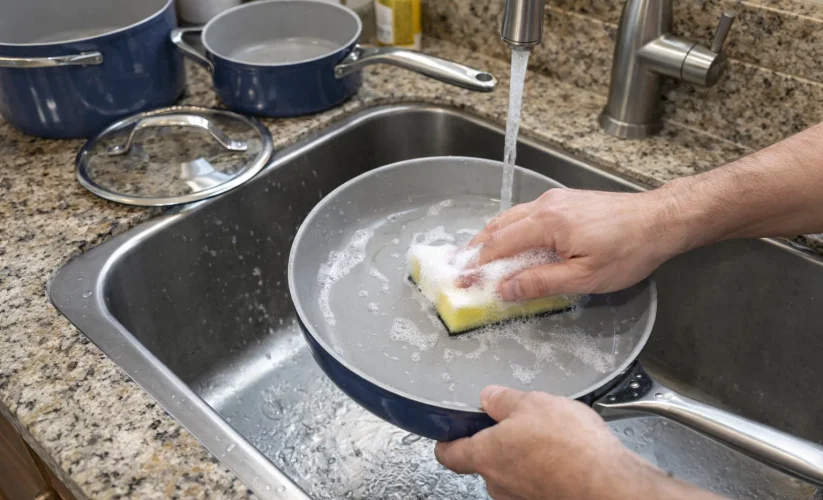
Once cooled, fill the sink with warm water and add a few drops of mild dish soap. Using a soft sponge or dishcloth, gently wash both the interior and exterior surfaces in circular motions. The naturally slick ceramic surface means most food residue releases easily without aggressive scrubbing. For the handles and exterior, pay special attention to any accumulated grease or splatters, as these areas often require more thorough cleaning than the nonstick interior.
After washing, rinse thoroughly with warm water to remove all soap residue. Soap buildup can create a filmy layer that reduces nonstick performance over time. Dry immediately with a soft, clean towel to prevent water spots and mineral deposits. While the cookware is technically dishwasher safe, hand washing significantly extends the life of the ceramic coating by avoiding the harsh detergents and extreme temperatures used in dishwashers.
Removing Stubborn Stains and Residue
Even with careful use, ceramic cookware can develop stains from highly pigmented foods, burnt-on residue, or mineral deposits from hard water. The baking soda and vinegar method provides an effective solution without damaging the delicate ceramic surface. Begin by sprinkling two to three tablespoons of baking soda over the stained areas, creating an even layer across the affected surface.
Add just enough water to the baking soda to form a thick paste with a consistency similar to toothpaste. Spread this paste evenly across stained areas using a soft sponge or cloth, ensuring complete coverage. For lighter stains, allow the paste to sit for 10 to 15 minutes before gently scrubbing in circular motions. The mild abrasive action of baking soda lifts stains without scratching the ceramic surface.
For more stubborn stains that resist the paste method, progress to the boiling technique. Add several tablespoons of water to the baking soda paste already in the pan, then add one cup of white vinegar. The mixture will foam vigorously as the acid reacts with the base, creating bubbles that help lift embedded residue. Place the pan on the stovetop over medium-low heat and bring the mixture to a gentle simmer.
Using a wooden or silicone spatula, gently agitate the mixture while it simmers, paying special attention to heavily stained areas. Continue simmering until the stains begin to loosen, which typically takes 5 to 10 minutes depending on severity. Once the residue releases, remove the pan from heat and allow it to cool completely. Discard the cleaning solution, rinse thoroughly with warm water, then wash with standard dish soap and water before drying completely.
Addressing Specific Cleaning Challenges
Burnt food residue requires a methodical approach to avoid damaging the ceramic coating while achieving thorough cleaning Ninja Ceramic Pro Cookware Set. Start by soaking the affected pan in warm, soapy water for 30 minutes to soften burnt particles. After soaking, use a soft sponge with gentle pressure to remove loosened debris. If residue persists, apply the baking soda paste method and let it work for several hours or overnight before attempting to remove stubborn areas.
Grease buildup, particularly on exterior surfaces, responds well to a combination of warm water and degreasing dish soap. For persistent grease, create a solution of equal parts white vinegar and water, spray or wipe it onto affected areas, and let it sit for 10 minutes before washing. The acidity of vinegar cuts through grease effectively without harsh chemicals that could damage the cookware’s finish.
Discoloration from highly acidic foods like tomato sauce or turmeric can be particularly challenging. These stains often penetrate deeper into the ceramic coating, requiring more intensive treatment. Apply a baking soda and water paste thickly over discolored areas and allow it to sit overnight. The extended contact time allows the baking soda to draw out the pigmentation gradually without aggressive scrubbing that could damage the surface.
Preventative Maintenance Strategies
Preventing damage proves far easier than repairing it, making proactive maintenance essential for extending cookware life. Always preheat pans on low to medium heat for approximately one minute before adding oil or food. This gradual heating prevents thermal shock and ensures even heat distribution across the cooking surface. Avoid using aerosol cooking sprays, as they contain additives that can build up on ceramic surfaces and eventually cause sticking.
Choose oils with high smoke points such as avocado, grapeseed, or refined coconut oil for cooking at higher temperatures. When oils exceed their smoke point, they break down and create sticky residue that adheres to the ceramic coating. This buildup not only makes cleaning more difficult but also gradually degrades the nonstick properties of the surface.
While the Ninja Ceramic Pro cookware is metal utensil safe, using softer implements like wood, silicone, or nylon extends the life of the coating. These materials provide an extra margin of safety against potential scratches, particularly as the cookware ages. Even the most scratch-resistant coatings benefit from gentle treatment throughout their lifetime.
Storage practices significantly impact cookware longevity. Avoid stacking pans directly on top of each other without protection. Use pan protectors, soft cloth dividers, or paper towels between stacked pieces to prevent scratches and scuffs. Many ceramic cookware sets include storage solutions specifically designed to protect the cooking surfaces during storage.
What to Avoid When Cleaning
Certain cleaning practices can permanently damage ceramic cookware, making awareness of what to avoid just as important as knowing proper techniques. Never use steel wool, scouring pads, or other abrasive cleaning tools on ceramic surfaces. These materials create microscopic scratches that accumulate over time, eventually compromising the nonstick properties and creating areas where food can stick and burn.
Harsh chemical cleaners, including oven cleaners, bleach, and ammonia-based products, can strip the ceramic coating or cause discoloration. Stick to mild dish soap, baking soda, and white vinegar for all cleaning needs. These gentle yet effective ingredients handle virtually any cleaning challenge without risking damage to the cookware.
Dishwasher use, while technically safe for Ninja Ceramic Pro cookware, should be minimized or avoided entirely for maximum longevity. The combination of high heat, harsh detergents, and vigorous water jets accelerates coating degradation. Professional chefs and cookware experts consistently recommend hand washing ceramic cookware, reporting significantly longer service life compared to dishwasher-cleaned pieces.
Never place ceramic cookware in extreme temperature environments. Avoid putting hot pans directly into the freezer or refrigerator, and never place frozen pans directly onto hot burners. These extreme temperature changes can cause warping, cracking, or separation of the ceramic coating from the metal base.
Expert Perspective on Ceramic Care
This expert insight underscores the importance of proper care in extending ceramic cookware life. While all ceramic coatings eventually wear down, following recommended cleaning Ninja Ceramic Pro Cookware Set and maintenance practices can significantly delay this process, potentially extending usable life from the typical one to two years to five years or more.
Signs of Coating Degradation
Recognizing when ceramic cookware reaches the end of its useful life ensures food safety and cooking performance. Surface degradation manifests as visible scratching, pitting, or areas where the coating appears worn through to the metal base. These imperfections create spots where food sticks and burns more easily, making cooking frustrating and cleanup difficult.
Peeling or flaking coating represents a definite sign that cookware should be retired. Using pans in this condition risks mixing coating particles into food. While ceramic coatings are generally considered nontoxic, ingesting coating fragments is undesirable and indicates the pan no longer performs its intended function.
Warping or bending that prevents the pan from sitting flat on the stovetop causes uneven cooking and indicates structural compromise. Warped pans typically result from thermal shock or overheating, and the damage cannot be reversed. Excessive permanent discoloration that cleaning cannot remove often signals deeper damage to the ceramic coating structure.
Long-term Care Recommendations
Developing consistent care habits maximizes the return on investment in quality ceramic cookware. Clean cookware immediately after each use once it has cooled to prevent residue from hardening and becoming more difficult to remove. This practice takes only a few extra minutes but significantly reduces the need for intensive cleaning sessions later.
Periodically inspect cookware for signs of wear or damage, addressing minor issues before they become major problems. Small stains treated promptly with gentle methods prevent them from setting permanently. Regular deep cleaning Ninja Ceramic Pro Cookware Set with the baking soda and vinegar method, performed monthly or as needed, maintains optimal nonstick performance.
Season new ceramic cookware before first use by washing thoroughly with warm soapy water, drying completely, then lightly coating the interior with a small amount of cooking oil. Heat on low for two to three minutes, allow to cool, then wash again. This process helps establish the nonstick surface and removes any manufacturing residues.
Store cookware in a dry environment with adequate ventilation to prevent moisture accumulation that can lead to discoloration or odors. If space permits, hang pans from hooks or store them in easily accessible locations that don’t require stacking. This approach not only protects the cookware but also makes it more convenient to use regularly.
Conclusion
Maintaining Ninja Ceramic Pro Cookware requires a balanced approach combining gentle daily cleaning Ninja Ceramic Pro Cookware Set, periodic deep cleaning for stains, and preventative care practices. The titanium-infused ceramic coating offers exceptional durability and performance when treated properly, justifying the investment through years of reliable service. Hand washing with mild dish soap, using baking soda and vinegar for stubborn stains, and avoiding thermal shock represent the cornerstones of effective ceramic cookware care.
Understanding what to avoid proves equally important as knowing proper techniques. Harsh abrasives, chemical cleaners, extreme temperatures, and excessive dishwasher use all accelerate coating degradation and shorten cookware life. By following manufacturer recommendations and established best practices, home cooks can maximize their cookware investment while enjoying consistently excellent cooking results.
The nontoxic nature of ceramic coatings, combined with superior nonstick performance, makes proper care worthwhile for health-conscious cooks. While ceramic surfaces eventually wear down through normal use, proper cleaning and maintenance can extend their useful life from one or two years to five years or more, providing excellent value and performance throughout that time.
Frequently Asked Questions
Can Ninja Ceramic Pro cookware go in the dishwasher?
Yes, Ninja Ceramic Pro cookware is dishwasher safe according to manufacturer specifications. However, hand washing is strongly recommended to extend the life of the ceramic coating. Dishwashers use harsh detergents and high heat that accelerate coating degradation over time. Hand washing with mild soap and warm water provides gentler cleaning that preserves nonstick performance for years longer than dishwasher use.
How do you remove burnt food from ceramic cookware?
To remove burnt food, first soak the pan in warm soapy water for 30 minutes to soften residue. Create a paste using baking soda and water, apply it to burnt areas, and let it sit for several hours or overnight. For stubborn burns, bring a mixture of water, baking soda, and white vinegar to a simmer in the pan, gently scraping with a wooden or silicone utensil. Never use metal scrapers or abrasive pads that can damage the ceramic surface.
Is it safe to use metal utensils on Ninja Ceramic Pro cookware?
Yes, the titanium-infused ceramic coating on Ninja Ceramic Pro cookware is designed to be metal utensil safe. The scratch-resistant surface can withstand metal tools without immediate damage. However, using softer utensils made from wood, silicone, or nylon provides an extra margin of safety and can help extend the life of the coating even further. Even scratch-resistant surfaces benefit from gentle treatment over time.
Why does my ceramic pan have white residue after washing?
White residue on ceramic cookware typically results from mineral deposits in hard water or soap buildup from incomplete rinsing. To remove it, wash the pan with a solution of equal parts white vinegar and water, which dissolves mineral deposits effectively. Rinse thoroughly with clean water and dry immediately. To prevent future buildup, ensure complete rinsing after washing and consider using filtered or softened water if hard water is a persistent problem.
How long does ceramic nonstick coating last?
The lifespan of ceramic nonstick coating varies based on usage and care. Traditional ceramic coatings can wear out in as little as one year with heavy use and improper care. Ninja’s titanium-infused ceramic coating, backed by a 10-year guarantee, offers superior durability. With proper care including hand washing, avoiding thermal shock, using appropriate heat levels, and following cleaning Ninja Ceramic Pro Cookware Set recommendations, users can expect excellent performance for three to five years or longer before noticeable degradation occurs.
Last update on 2026-10-11 / Affiliate links / Images from Amazon Product Advertising API
*We may earn a commission for purchases made using our links. Please see our disclosure to learn more.